



Se você gerencia equipes de segurança empresarial, lidera equipes de expedição ao ar livre, administra frotas de logística ou opera embarcações marítimas, equipamentos portáteis de comunicação confiáveis são indispensáveis. A escolha inadequada de rádios pode causar perda de sinal, falhas de comunicação, riscos de segurança e custos desnecessários a longo prazo. Como fabricante profissional de rádios, a QYT compilou este guia completo de compra para detalhar todos os principais tipos de rádios, diferenças entre bandas de frequência, modelos específicos para uso marítimo e opções de formatos, ajudando você a escolher rádios adequados aos seus cenários de trabalho específicos.
Rádios analógicos, digitais e PoC: comparação dos principais recursos
Três tecnologias de rádio principais dominam o mercado, cada uma adaptada a diferentes orçamentos, necessidades de cobertura e ambientes de uso. A tabela abaixo apresenta suas principais vantagens, desvantagens e cenários aplicáveis:
|
Recurso |
Rádios analógicos |
Rádios digitais de modo duplo |
Rádios PoC de rede pública |
|
Cobertura do sinal |
Curto a médio alcance (1–5 km) |
Alcance médio-longo com desempenho de áudio estável |
Distância ilimitada dentro da cobertura do sinal celular |
|
Custo inicial de compra |
Baixo, econômico |
Faixa de preço média |
Custo inicial médio a alto |
|
Despesas recorrentes |
Sem taxas mensais |
Sem cobranças contínuas de serviço |
É necessária assinatura mensal de dados do cartão SIM |
|
Qualidade de áudio de voz |
Sujeito a estática e interferências quando distante das fontes de sinal |
Som consistentemente nítido até sair do alcance efetivo |
Áudio em alta definição, afetado apenas pela estabilidade da rede 4G/5G local |
|
Principais cenários de aplicação |
Lojas de varejo, eventos temporários locais, patrulhas de segurança patrimonial |
Canteiros de obras, grandes armazéns, equipes de segurança industrial |
Logística entre cidades, frotas de caminhões de longa distância, gerenciamento de despacho municipal |
Rádios analógicos
Como a ferramenta de comunicação tradicional e mais amplamente utilizada, os rádios analógicos transmitem sinais contínuos de voz em frequências fixas. Suas maiores vantagens são a operação simples e os baixos custos de entrada. A principal desvantagem é a degradação do sinal: a estática e a distorção de áudio tornam-se intensas à medida que a distância de comunicação aumenta.
Rádios digitais
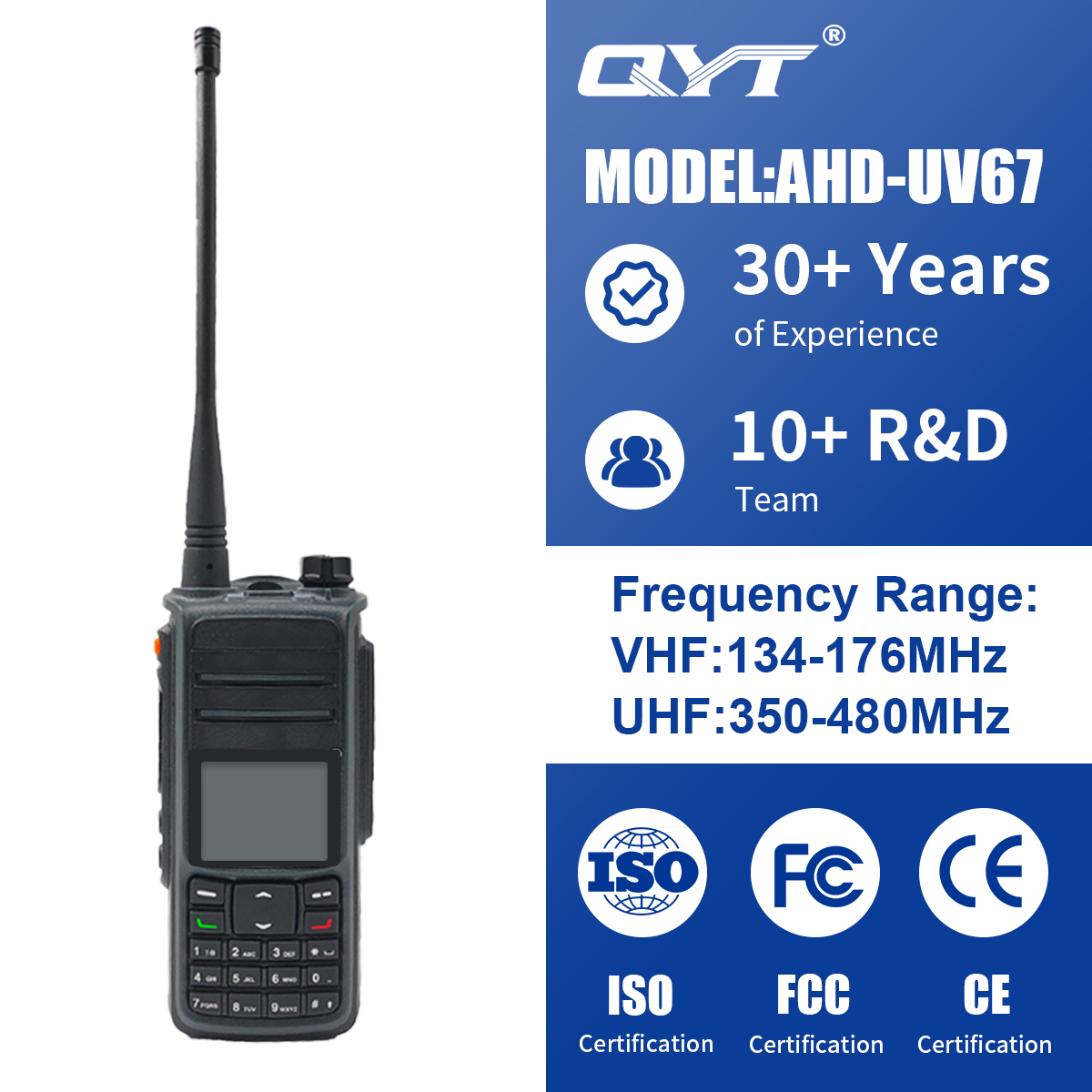
Dispositivos como oRádio de Comunicação PortátilQYT AHD-UV67adotam protocolos de transmissão digital e convertem voz em pacotes de dados para transmissão. Eles oferecem áudio cristalino, criptografia de voz integrada para comunicação confidencial, maior duração da bateria e velocidades mais rápidas de processamento de dados. Uma observação importante: rádios digitais independentes não podem se conectar com rádios analógicos, enquanto unidades digitais de modo duplo oferecem troca contínua entre modos analógico e digital para compatibilidade entre dispositivos.
Rádios PoC de rede pública
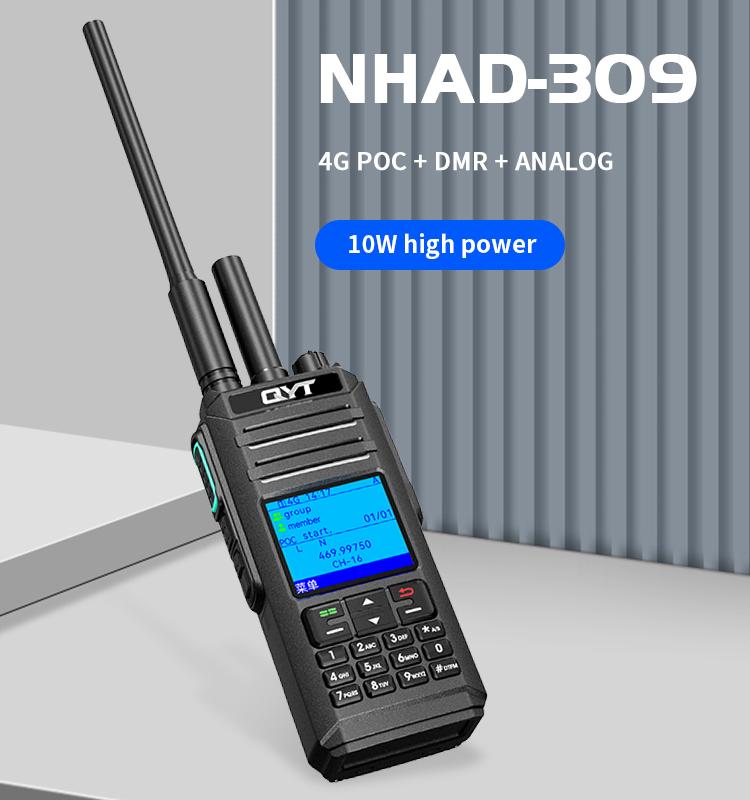
Os rádios PoC funcionam de forma idêntica aos telefones celulares ao inserir cartões SIM e depender da infraestrutura de rede celular 4G/LTE/5G. A principal vantagem é a comunicação sem limite de distância onde houver sinais celulares, tornando-os a melhor escolha para coordenação de frotas em nível nacional. O único custo contínuo é o pagamento regular do plano de dados do cartão SIM inserido. Nossa série QYT NH, incluindo NH-20,NHAD-309e NH-85 são rádios portáteis PoC 4G maduros desenvolvidos para comunicação de equipes entre diferentes regiões.
Bandas de frequência VHF vs UHF: escolha com base no terreno de trabalho
Os rádios móveis terrestres utilizam principalmente duas bandas de frequência: VHF (136–174 MHz) e UHF (400–470/480 MHz). Escolher a banda errada causará quedas frequentes de sinal e recepção fraca.
Banda VHF (136–174 MHz)
As ondas de rádio VHF possuem comprimentos de onda mais longos, com excelente desempenho de difração, permitindo que os sinais contornem suavemente colinas, árvores densas e superfícies de água abertas.
Melhores ambientes de uso: Áreas agrícolas abertas, navegação marítima, operações florestais em campo e grandes áreas externas de natureza selvagem.
Banda UHF (400–470/480 MHz)
As ondas UHF são mais curtas, mas possuem uma capacidade superior de penetração, atravessando facilmente paredes de concreto, estruturas de aço, paredes de drywall e edifícios urbanos densos.
Melhores ambientes de uso: Complexos de escritórios internos, edifícios urbanos altos, armazéns fechados e fábricas de manufatura.
Dica de especialista: rádios de banda única vs banda dupla
Rádios de banda única transmitem e recebem apenas em VHF ou UHF. Rádios UV de banda dupla, como a série QYT UV, suportam monitoramento e transmissão simultâneos em ambas as bandas de frequência, assim como smartphones com dois chips, eliminando o risco de perda completa de sinal em terrenos mistos.
Transceptores marítimos VHF especializados: desenvolvidos para condições marítimas adversas
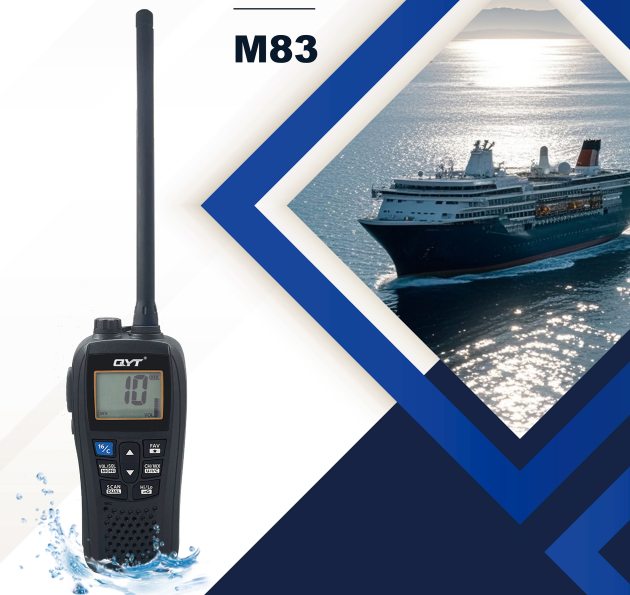
Rádios terrestres comuns não conseguem resistir à corrosão causada pela água salgada, à umidade constante e à submersão acidental em embarcações. Transceptores marítimos VHF desenvolvidos especificamente, incluindo o QYT M83 cumprem todos os padrões da Organização Marítima Internacional (IMO), com três funções exclusivas principais:
1.Certificação de impermeabilidade IP67: Suporta submersão em água com 1 metro de profundidade por até 30 minutos sem danos aos circuitos internos.
2.Tecnologia Flutuar e Piscar: O rádio flutua se cair na água. O QYT M83 adiciona uma luz LED inferior que pisca automaticamente mesmo quando desligado, permitindo uma recuperação rápida em águas escuras durante a noite.
3.Tri-Watch e canais internacionais pré-programados: Pré-carregado com grupos de canais marítimos dos EUA, internacionais e canadenses, incluindo o Canal 16 de emergência obrigatório para chamadas de socorro e canais dedicados de alerta meteorológico (WX) para notificações meteorológicas marítimas em tempo real.
Transceptores portáteis vs montados em veículos: combine com suas necessidades de mobilidade
Além da frequência e do tipo de rede, os rádios são divididos em dois formatos principais com base nas necessidades de mobilidade: unidades portáteis de mão e transceptores móveis montados em veículos.
Rádios portáteis bidirecionais
Rádios portáteis leves alimentados por bateria, com antenas integradas e clipes de cinto para uso.
•Potência de saída típica: 0,5 W a 5 W
•Vantagens: Totalmente independentes, não requerem alimentação externa, fáceis de transportar durante patrulhas a pé
•Usuários ideais: Seguranças, equipes de eventos e equipes de patrulha de campo a pé
Transceptores móveis montados em carros/embarcações
Projetados para instalação permanente ou semipermanente dentro de veículos, navios ou estações base fixas. Recebem energia diretamente das baterias dos veículos e exigem antenas externas separadas de alto ganho.
•Potência de saída típica: 10 W a mais de 50 W
•Vantagens: Alcance de comunicação extremamente longo, fonte de alimentação contínua estável e desempenho consistente de sinal em longas distâncias
•Usuários ideais: Frotas logísticas, embarcações de resgate, veículos de busca e salvamento e equipes de despacho de táxis
Lista de verificação rápida para encontrar o rádio ideal
Use este guia simples de correspondência para restringir instantaneamente a seleção do seu dispositivo:
1.Necessita de alcance ilimitado de comunicação entre cidades para frotas → Selecione rádios PoC de rede pública
2.Trabalha dentro de edifícios com vários andares ou fábricas industriais → Escolha rádios digitais de modo duplo UHF
3.Operar iates, barcos de pesca ou embarcações comerciais → Escolha transceptores VHF marítimos certificados pela IMO IP67
4.Gerenciar equipes de campo em fazendas ou áreas florestais abertas → Opte por rádios VHF portáteis
5.Buscar comunicação de longa distância máxima para frotas de veículos → Instale transceptores móveis montados em veículos combinados com antenas externas de alto ganho
Palavras finais
A QYT projeta todos os equipamentos de comunicação com durabilidade robusta, eficiência de custos e operação fácil de usar como princípios fundamentais. Seja para comunicação digital segura e criptografada, cobertura nacional PoC sem fronteiras ou confiabilidade de VHF marítimo que salva vidas para viagens aquáticas, oferecemos soluções direcionadas para cada setor e ambiente.
Se precisar de orientação sobre a configuração de sistemas de comunicação, solicitações de licenças de rádio locais ou acessórios de suporte adequados, entre em contato com a equipe profissional da QYT para obter consultoria técnica gratuita e serviços de cotação personalizados.